Politics

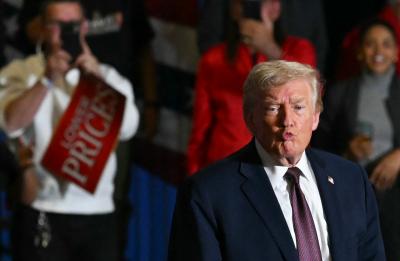


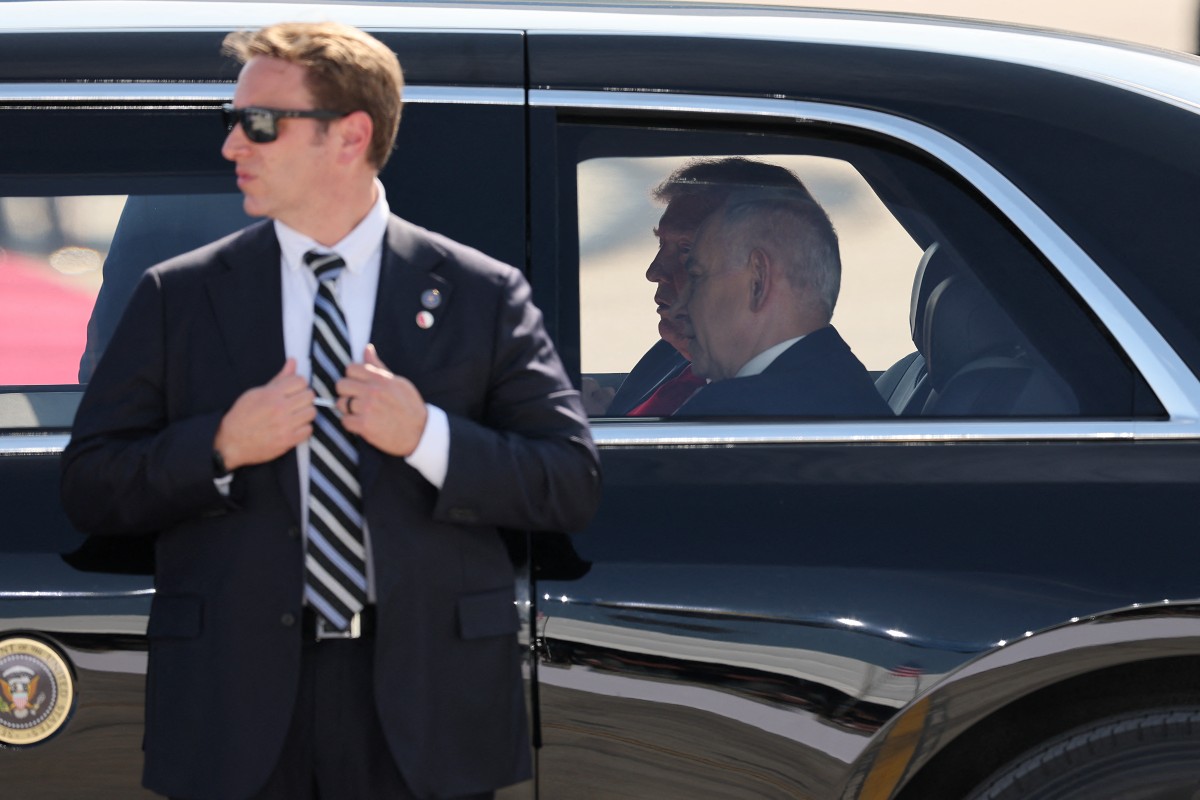




Shortly ahead of the anticipated meeting between U.S. President Donald Trump and Israeli Prime Minister Benjamin Netanyahu, it appears that their differences over the Syrian file have entered a decisive phase.
Syria is not the only item on the Florida agenda. Gaza will be a central topic, as will Lebanon and, of course, Iran, while Netanyahu is expected to freeze any major military escalation in the coming days.
As a result, the region’s major files are likely to be postponed to next year, a natural development that may see 2026 bring shifts in both the military and political arenas. Netanyahu is keenly awaiting such changes as he approaches elections still scheduled, for now, for October next year, though they may be brought forward.
Netanyahu wants to gauge Trump’s intentions and define the contours of U.S. policy in the region before taking any step that might provoke him, whether in Syria, Gaza, or Lebanon. To that end, he is striving to separate the region’s files, even as he seeks to press ahead with his expansionist and destructive Syrian policy, aimed at confronting “threats” and imposing a security arrangement on southern Damascus.
The current divergence over Syria could indeed evolve into an outright dispute. It is also true, however, that Syria remains a lower priority than Gaza and the war in Ukraine on the U.S. president’s list of peace-imposition efforts.
By way of reminder, Israel has carried out more than 1,000 airstrikes in Syria, targeting Syrian military assets as well as civilian and military sites. It has also occupied an area estimated at 346 square kilometers, where it has established nine military bases, eight of them in Quneitra alone. Israel has imposed a near-air blockade over the entirety of southern Syria, extending to Sweida, not out of concern for the Druze, but rather in pursuit of strategic expansion, national security imperatives, and a religiously framed vision under the banner of a “safe zone.”
This approach does not align with Trump’s outlook. The U.S. president wants to close the region’s active conflict files and establish a stable settlement-based order consistent with his broader vision for peace in the Middle East as a long-term strategic interest, inseparable from the Abraham Accords.
Between Trump’s intention to present Syria as a country emerging from civil war and capable of reconstruction and unity despite its deep structural crises, and Netanyahu’s objective of weakening the Damascus regime, fomenting chaos, possibly fragmentation, and occupying territory, the disagreement will remain firmly managed by Washington.
American Red Lines
Accordingly, Netanyahu is likely to continue his Syrian policy toward Damascus with U.S. understanding, but within a ceiling defined by red lines that Israel will not be allowed to cross.
These include preventing the overthrow of the Damascus government, refraining from targeting leaders of the new ruling authority, and avoiding strikes on vital installations, as occurred when the General Staff headquarters or areas near the presidential palace were bombed. There are also limits placed on Israeli operations in southern Syria.
The coming period, however, is fraught with uncertainty, particularly in Gaza. This means that if Netanyahu feels his hands are tied there, and if he is unable to further narrow the gap with his domestic rivals ahead of elections, he may resort to escalation in Syria.
Although Netanyahu is well aware of Trump’s ambitions regarding Syria, he continues a policy that harms the government of President Ahmad al-Sharaa, who is striving to secure domestic legitimacy. This suggests that the Israeli prime minister, deeply wary of the Damascus leadership, is indifferent to U.S. hopes for Syria. He neither celebrates American strikes against ISIS nor meaningfully distinguishes between ISIS and those ruling in Damascus. Instead, he acts in opposition to the broader U.S. policy, signaling that he will not move forward with a proposed security agreement that would require withdrawal from seized territories and the relinquishing of his security demands. The next phase is therefore highly complex and carries political risks for Israel that it is not prepared to bear.
All this comes as Trump has engaged in peace efforts in Ukraine and the Middle East, challenging his usual isolationist instincts and the “America First” doctrine of his “Make America Great Again” movement. He has aimed to prove that he can succeed globally where previous presidents failed.
So far, results have been limited, despite his claim to have served as a successful mediator in eight wars. But his current rush for quick victories and his tendency to skip steps, as seen in Syria, are now placing him on a collision course with the current Israeli leadership.
Recently, many Israelis have questioned why Trump’s campaign for Netanyahu’s pardon has waned, a development that helps explain the widening gap between the two men. Reconciling their ambitions in the 2026 election year, with general elections in Israel and midterms in the United States, will be no easy task.
There is growing unease over a potential clash between Trump’s boundless desire to act as a global kingmaker, a leader courted and flattered by other leaders, and Netanyahu’s drive to present himself as a regional strongman, acutely aware of the realities on the ground, particularly in Gaza and Syria, even if that means waging battles that run counter to the interests of Trump’s allies.
Despite everything, Israel will continue to occupy a central position in U.S. security strategy in the region. The U.S.–Israeli alliance remains one of the pillars of American strategy in the Middle East and a key partnership in “strengthening deterrence.” At the same time, however, there is mounting concern and a set of structural Israeli vulnerabilities that threaten the alliance’s long-term sustainability.
Please post your comments on:
[email protected]