Politics





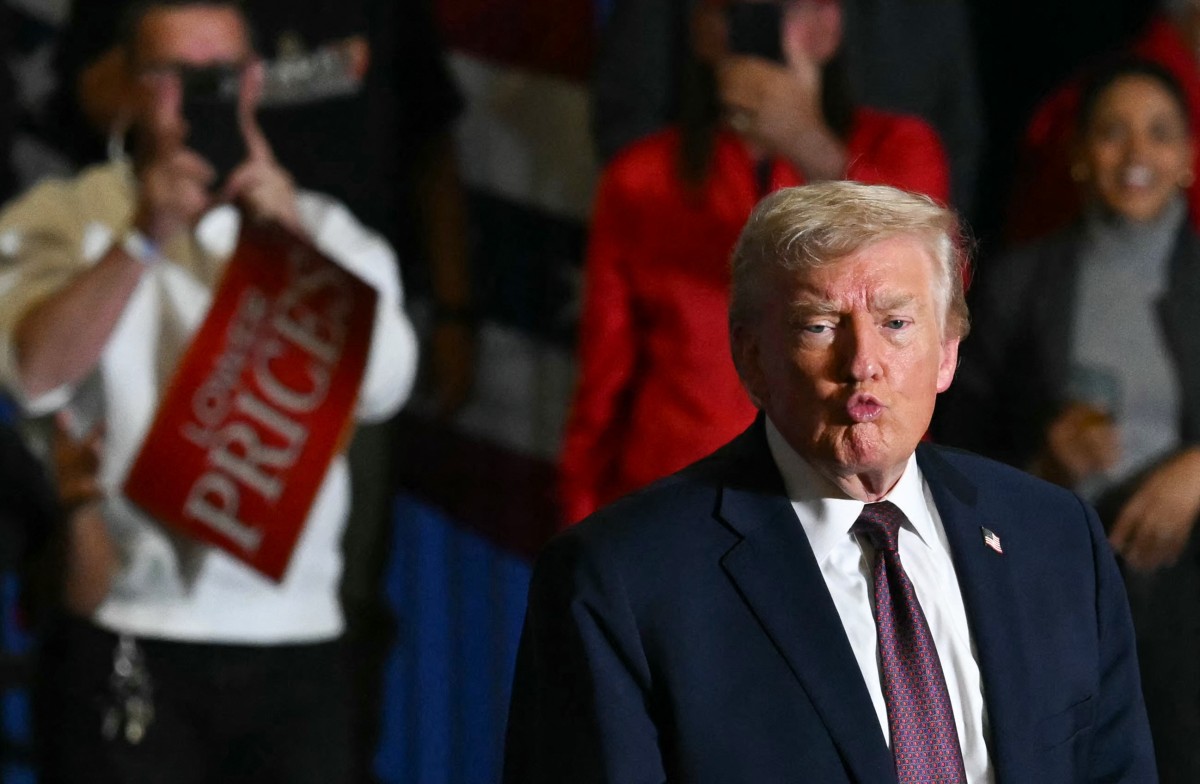




Rushing to respond, President Donald Trump took to the airwaves to address the American people. Recent local elections revealed a clear tilt toward Democratic candidates, with Trump-backed contenders winning only in deeply conservative Republican strongholds. They fell short in more moderate Republican areas and in states and cities that lean Democratic.
In a half-hour speech—longer than the networks had scheduled—Trump followed his usual playbook: pinning the nation's problems on the previous administration. He blamed the Biden administration for everything from an “invasion of immigrants” who “teach children to hate America,” to soaring living costs and inflation, to other countries “taking advantage” of the U.S., and to a weak economy and neglected military.
At the same time, he credited himself with fixing these issues faster than all past administrations combined. He claimed his policies had stopped illegal immigration in its tracks, lowered prices, reduced inflation and drug costs, raised wages, and attracted $18 trillion in investment.
Most strikingly—though opponents call these assertions unfounded—Trump declared he had ended eight wars at record speed. He listed conflicts between Israel and Gaza, southern Lebanon, Syria, Iran, and Yemen, plus those between India and Pakistan, Thailand and Cambodia, Serbia and Kosovo, Azerbaijan and Armenia, Ethiopia and Egypt, and Rwanda and Congo.
Fact-Checking the Claims
On illegal immigration, it’s hard to confirm that Trump’s policies “stopped it in seven months”—let alone believe that 25 million illegal immigrants have “invaded” the country.
On the economy, it’s not accurate to say inflation has dropped to the Federal Reserve’s target, even though it has fallen significantly since its 2022 peak. It remains above the desired level.
His touted tax cuts appear broader on paper than in substance and will likely face opposition in Congress. What’s more, the resulting drop in revenue is forcing the government to borrow more.
Claims of reducing drug prices by 400, 500, or even 600 percent seem clearly misleading.
In foreign policy, the exaggeration is plain. The idea that he “settled eight wars in ten months” and “brought peace to the Middle East” isn’t backed by any evidence. Major conflicts, including Israeli offensives in Gaza, southern Lebanon, and Syria, are still ongoing.
Meanwhile, a war Trump once said he could end “in one day”—Russia’s war in Ukraine—rages on. Trump himself has raised tensions in the Caribbean and the eastern Pacific by mobilizing forces around Venezuela, authorizing covert operations there, and striking boats in its territorial waters.
He also claimed to have “destroyed the Iranian nuclear threat,” yet Iran’s nuclear program remains a major international concern, with no independent verified reports of its infrastructure being dismantled.
Trump’s Objectives
Facing unfavorable polls and recent local election results, Trump is chasing a win that would be hard to achieve and even harder to sell domestically. Ukraine remains defiant, with Russia’s Vladimir Putin insisting on maximalist demands and Ukraine’s Volodymyr Zelenskyy—backed by the EU—refusing to cede territory. Trump is likely to ramp up pressure on both Kyiv and Brussels to seek a negotiated settlement.
While he claims to have “achieved peace” in the Middle East, the practical focus will be on deals between Israel and Arab states like Saudi Arabia, sidelining the Palestinians—an approach that could plant the seeds of greater instability.
In Venezuela, tensions are set to rise, and Trump may push for regime change under the banner of “saving America from a drug invasion,” risking further regional unrest.
The Real Target: The Midterms
Trump’s speech reads like a campaign blueprint aimed at reviving his demoralized base after recent electoral and polling setbacks. He’s betting on hot-button issues to rally core Republican voters.
Current polls forecasting a Democratic landslide in 2026 may underestimate the fervor of Republican voters or the impact of an economic downturn or foreign crisis before election day. Poll averages tracked by Real Clear Politics show 52% support for Trump’s immigration policy and 48% for his economic handling—reflecting the GOP’s razor-thin House majority (219–216) and narrow Senate edge (53–47). Redistricting in states like Texas and Florida could add 5–7 House seats, pushing Republicans toward the 235-seat mark needed to secure a veto-proof majority.
But the risks are real. Democrats, eyeing Republican-held seats in states like Ohio, Montana, and Pennsylvania, will hammer Trump over inflation fueled by his tariffs—which polls say are squeezing 55% of suburban households. Sanctions on Venezuela and trade tensions with China could push gas prices to $4 a gallon, eroding Trump’s support in industrial swing states if growth dips below 2.5%.
Hot-button issues like abortion and “democracy” could boost liberal turnout, putting Republican candidates on the defensive in states like California, New York, and Massachusetts.
If unemployment stays below 3.5% and stocks keep rising, Republicans may hold their ground. Otherwise, Democrats could turn the midterms into a referendum on Trump’s “America First” agenda—and potentially reclaim both chambers of Congress.
Please post your comments on:
[email protected]