Politics
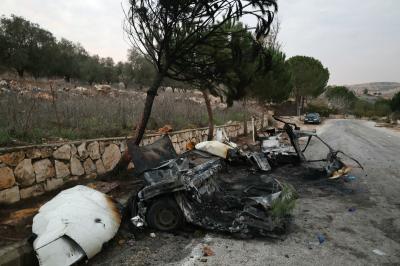






Current developments suggest that Israel’s threat to launch a new war against Lebanon is not merely political rhetoric, but is accompanied by concrete preparations and escalation on the ground. Official Hebrew-language media, particularly the Israeli Broadcasting Corporation and Yedioth Ahronoth, continue to report that the Israeli army has completed its preparations for a large-scale attack on Hezbollah positions in Lebanon should the Lebanese government and army fail to disarm the group before the end of the current year.
Israeli media reported that Tel Aviv conveyed this warning to the United States, stressing that it would act unilaterally to disarm Hezbollah, even if that meant engaging in what it described as “days of combat.”
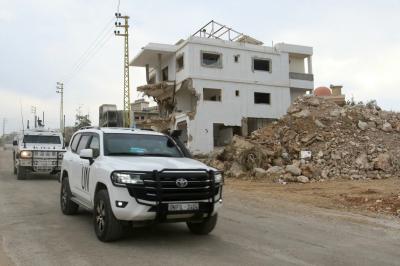
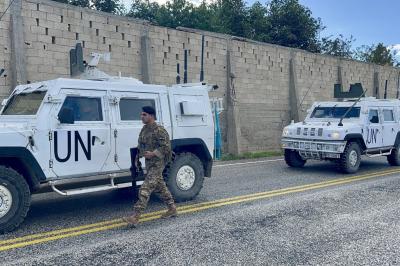
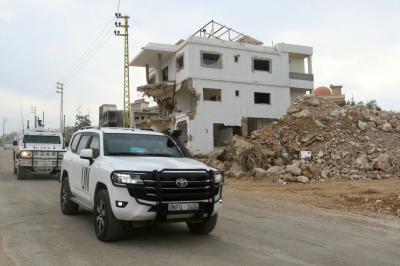
However, Israel has not in fact halted its war against Hezbollah, as it has failed to adhere to the ceasefire agreement announced on November 27, 2025. Violations have exceeded 4,500 documented breaches recorded by UNIFIL and the Lebanese Army deployed south of the Litani River.
These violations have included the assassination of Hezbollah leaders and fighters, as well as the shelling of towns north of the Litani River, extending as far as the Bekaa Valley, under the pretext of preventing Hezbollah from rebuilding its military strength and weakening its capabilities.
At the same time, Israel is seeking to pressure the Lebanese authorities into disarming the group, even by force.
In reality, Israelis do not conceal that their objective is not merely to disarm Hezbollah in the south, but to prevent it from re-emerging as a permanent deterrent force and to inflict what they describe as “structural incapacitation” upon it.
They believe that the current period ahead of Lebanon’s parliamentary elections scheduled for next May represents the most opportune moment to deliver a decisive blow to Hezbollah, should they choose to do so.
Conversely, the issue of disarmament is the subject of a sharp divide between the authorities and the main political forces.
The government has committed to the army command’s plan to restrict weapons to the hands of the state, dubbed “Shield of the Nation,” which consists of five phases, the first of which covers the area south of the Litani River and is set to conclude on the final day of the current year.
However, the government fears that Israel may launch a new war if Hezbollah is not disarmed.
At the same time, Arab and foreign countries willing to assist Lebanon in reconstruction efforts are also making disarmament a precondition for providing aid.
Hezbollah, however, rejects disarmament and surrender “even if the sky were to collapse onto the earth,” as stated by its Secretary-General Sheikh Naim Qassem.
The group considers disarmament to be “the execution of Lebanon’s strength” and a capitulation to Israel.
Accordingly, it demands an Israeli withdrawal first, asserting that any discussion of the fate of weapons north of the Litani River must take place within the framework of a “national security strategy” that the government has pledged to develop.
Pending that, Hezbollah says it will adhere to a policy of “strategic patience,” betting on time and pushing toward the reconstruction of what the war has destroyed.
It nevertheless warns Israel that any renewed war it launches against the group will not be a picnic and will be devastating for all.
Lebanese political forces opposed to Hezbollah are calling on the government to disarm it, viewing this as a path to restoring state sovereignty.
They base their position on the Taif Agreement and UN Security Council Resolution 1701.
They also argue that the continued presence of these weapons provides Israel with a constant pretext to destabilize Lebanon and obstruct its economic recovery.
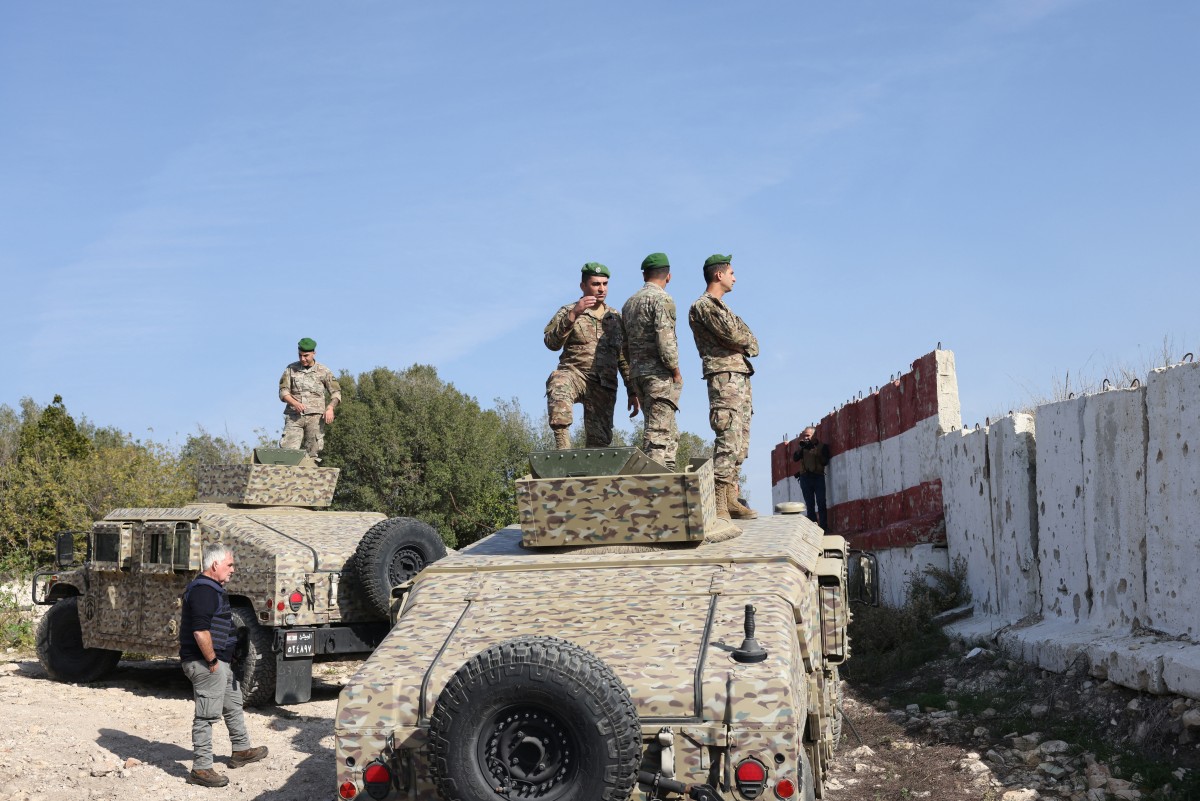
Against this backdrop, the Lebanese Army is implementing the first phase of the plan to restrict weapons to the state south of the Litani River.
More than 85 percent of this phase has been completed, with the remainder set to be finalized within two weeks.
Nevertheless, the army is facing intense US-Israeli pressure.
It is also suffering from shortages in weapons, equipment, and logistical capabilities.
In addition, it fears internal confrontations should it be forced to conduct house searches.
At the same time, it publicly criticizes Israeli attacks.
The army’s dilemma lies in the fact that it is caught between impossible international demands to search every home in the south and a complex field reality that could place it in direct confrontation with Hezbollah, despite repeated assurances from both sides that such a clash is unthinkable.
The greatest concern is that the disarmament deadline will expire on the 31st of the current month without completion, which Israel may interpret as a failure by the Lebanese government, thereby increasing the likelihood of resorting to war.
Conversely, some believe that any forced acceleration of disarmament to include areas north of the Litani River, outside the framework of a national security strategy, could ignite an internal conflict threatening Lebanon’s very fate.
Some argue that the current crisis exposes the contradiction between the state’s proclaimed sovereignty and its submission to external pressures, and that the failure of political forces to agree on a national settlement turns Lebanon into an arena for regional conflicts.
Thus, the Lebanese dispute appears to revolve around identifying the greater threat to the country: Israeli occupation or Hezbollah’s weapons.
This question, combined with Israel’s declared readiness for war, places Lebanon at a perilous crossroads between an impossible political solution and a devastating all-out war.
Please post your comments on:
[email protected]