Politics



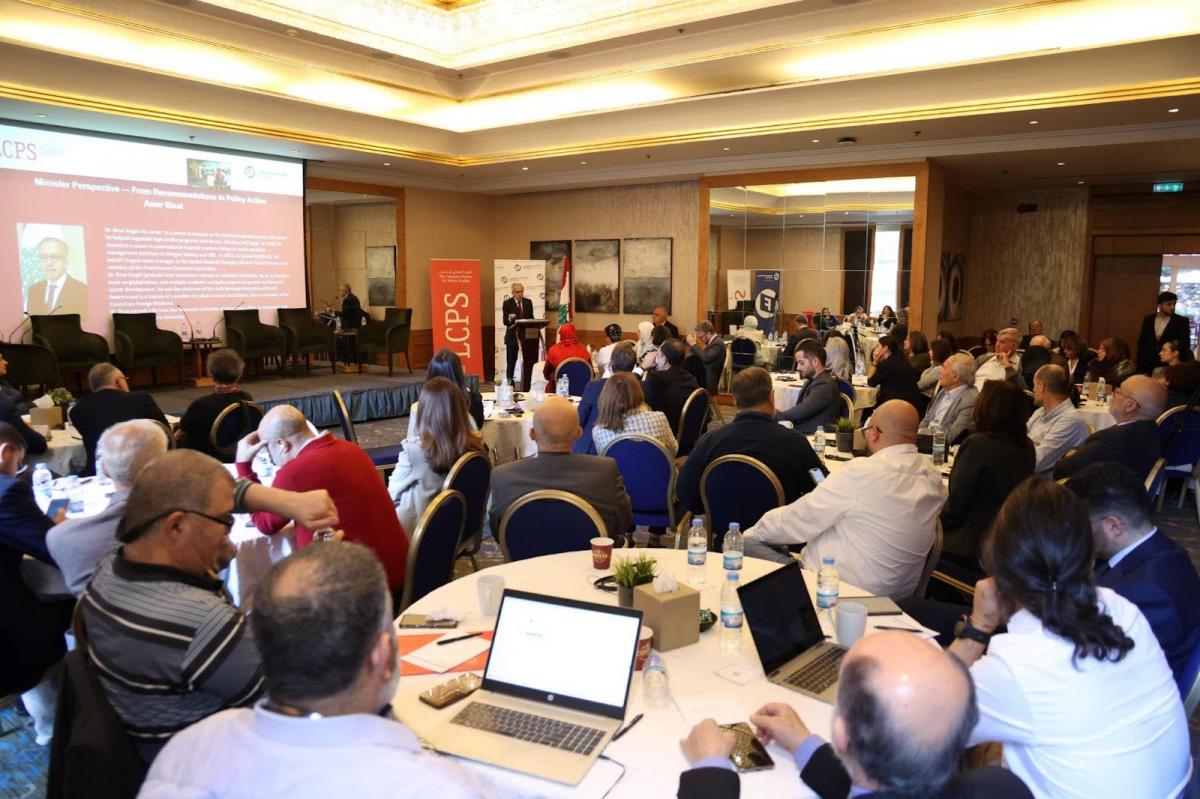




At a time when Lebanon’s economy is going through its most severe structural crisis in decades, the conference titled “Leveraging Lebanon’s Promising Economic Sectors,” organized by the Lebanese Center for Policy Studies (LCPS) in partnership with the Friedrich Naumann Foundation (FNF), emerged as a pivotal moment to reassess potential growth pathways and to offer a realistic reading of the sectors that could serve as new economic drivers for the country.
Held in Beirut on November 27, the conference brought together ministers, experts, politicians, economists, and civil society stakeholders to move beyond conventional diagnoses and toward practical approaches capable of addressing challenges and rebuilding lost trust.
Structural Restrictions Surround the Economy… and an Urgent Need for New Growth Paths
The conference was based on a full year of research focused on three key sectors: agri-food, cultural and creative industries, and pharmaceuticals.
Discussions converged on a single reality: these sectors possess strong growth potential, yet remain shackled by deep structural challenges that require clear decisions and urgent institutional reforms.
In his opening address, Minister of Economy and Trade Amer Bsat emphasized the need to transition from a fragile rent-based economy to a productive and competitive one. He emphasized that Lebanon possesses the human capital and private-sector capabilities needed for recovery, provided there is genuine political will for reform and institutional rebuilding.
Mohammad Allem, Chairman of the Board of the Lebanese Center for Policy Studies, underlined the importance of reliable data, noting that any public policy not grounded in accurate information remains either incomplete or ineffective.
Meanwhile, Christoph Kleemann, Director of the Friedrich Naumann Foundation, pointed out that Lebanese entrepreneurship has proven its resilience despite successive crises, but warned that its sustainability depends on an institutional environment that protects initiatives and facilitates growth.
Agri-Food Sector: From Resilience to Competitiveness
The session dedicated to the agri-food sector focused on how to move it from a phase of mere “resilience” to one of true “competitiveness,” in the face of accumulated crises such as:
– High inflation is weighing on production
– Fragmentation of agricultural land
– Lack of traceability and standards
– Insufficient testing and quality infrastructure
– An aging rural workforce
Participants agreed on a set of solutions, most notably:
– Improving product traceability to enhance quality and boost export potential
– Upgrading laboratories and conformity certification
– Reducing post-harvest losses through modernized logistics
– Integrating renewable energy and digital tools into production chains
They emphasized that product quality could become a distinctive “Lebanese brand” if supported by the appropriate logistical and institutional framework.
Cultural and Creative Industries: The Economy of Identity and a Missed Opportunity
Cultural and creative industries featured prominently at the conference, given their capacity to generate employment and reinforce Lebanese identity. Discussions highlighted major challenges, including:
– The absence of a clear institutional framework
– High taxes that hinder entrepreneurs and creatives
– Talents emigration
– A severe lack of data is needed for policy design
Proposed solutions included:
– Establishing a unified national authority for the sector
– Simplifying administrative procedures for artists and creative businesses
– Supporting digital transformation in media and festivals
– Adopting policies to nurture and protect young talent
Speakers agreed that creativity can become a fully-fledged economic sector if backed by strong institutions and a clear investment environment.
Pharmaceutical Sector: Technical Success in Need of a Strong Regulatory Umbrella
The pharmaceutical sector stood out as one of the most growth-ready sectors, having demonstrated resilience and technical capacity during the recent crisis. However, several obstacles continue to limit its expansion, notably:
– The absence of a modern regulatory framework
– Insufficiently equipped laboratories for international accreditation
– Unclear registration and pricing procedures
– Export difficulties and weak access to regional markets
Experts proposed solutions such as:
– Digitizing pharmaceutical approvals
– Upgrading national laboratories
– Establishing transparent pricing and registration mechanisms
– Building partnerships between industry, research centers, and universities
– Leveraging the expertise of the Lebanese diasporas active in global pharmaceutical industries
A Common Denominator Across Sectors: Quality Comes First
Despite the diversity of the sectors discussed, all participants agreed that quality is the fastest route to restoring Lebanon’s competitiveness, through:
– Updating standards and certification systems
– Improving testing services and laboratories
– Aligning standards with major regional markets
– Streamlining approval and licensing procedures
According to participants, these measures could place Lebanon back on the export map, provided they are accompanied by genuine institutional support.
A Model for the Kind of Planning Lebanon Needs
In an interview with Al Safa News, economist Dr. Youssef Suleiman described the conference as a model for what economic planning should look like during the recovery phase. He said:
“Lebanon does not suffer from a lack of potential, but from weak governance and the absence of institutional coordination. The three sectors discussed are capable of creating added value and generating foreign currency revenues, but they require a transparent regulatory umbrella, political stability, and quality infrastructure. If these elements are in place, these sectors could, within a few years, form a solid foundation for sustainable economic growth.”
Suleiman concluded that Lebanon today faces a clear choice: either remain trapped in the cycle of collapse, or invest in productive sectors that possess genuine competitive advantages.
With these discussions and recommendations, the conference has come to an end. Yet the reform debate remains open—particularly as the future of Lebanon’s economy hinges on the ability of its institutions to translate recommendations into policies, and opportunities into tangible growth that improves the lives of citizens.
Please post your comments on:
[email protected]