Politics





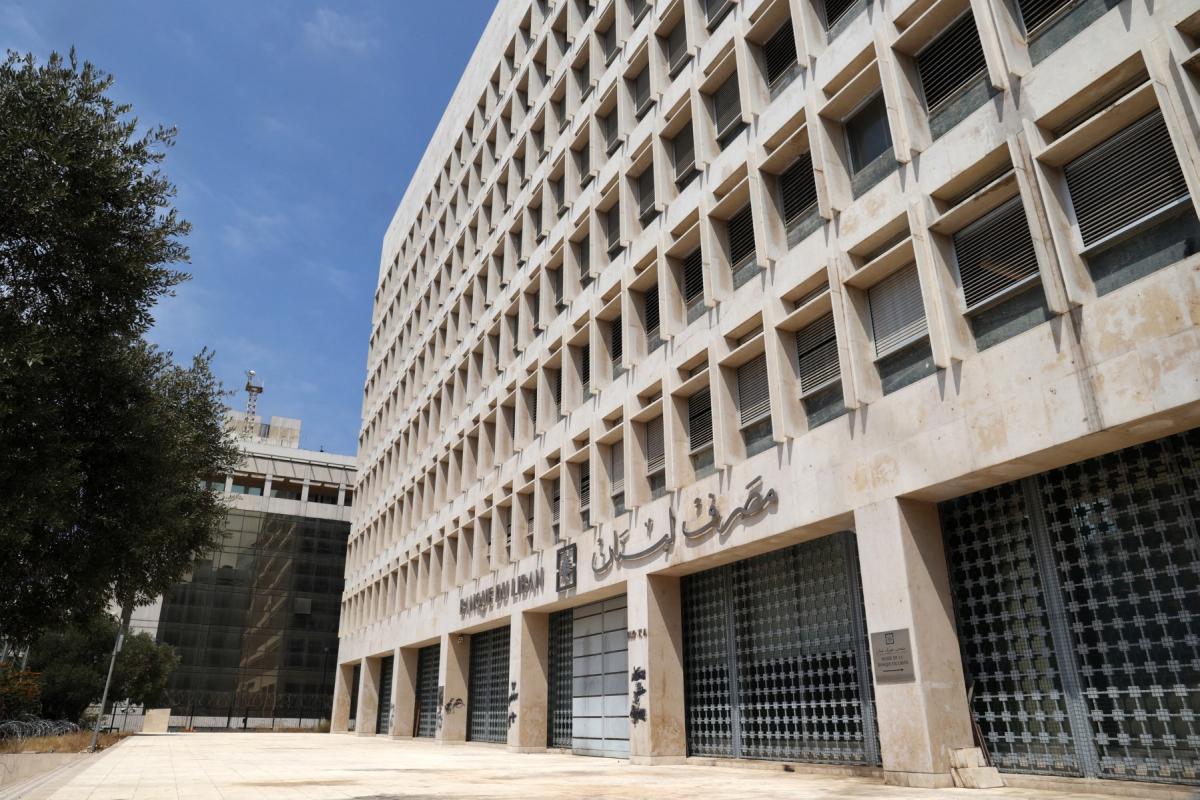




Lebanon’s monetary crisis returns to square one with every new draft law aimed at distributing losses. The latest proposal, now in its ninth version, differs little from previous drafts and recovery plans in one key respect: it has been rejected outright by the Association of Banks in Lebanon (ABL), which argues that it erodes depositors’ rights and sidelines the principles of accountability and justice.
In its first response, the ABL issued an open letter addressed to the three presidents and to depositors, outlining its position on the draft Law on Financial Order and Deposit Recovery, and calling for cooperation to reach a consensual solution that could contribute to Lebanon’s economic revival.
The Banks’ Position
In essence, the ABL proposes holding the state fully responsible for the financial gap and “liquifying” Banque du Liban’s (BDL) assets to recover banks’ deposits held at the central bank. According to the association, BDL’s assets—including gold valued at around $39 billion, Middle East Airlines, real estate holdings, the casino, and other properties—would be sufficient, if sold, to cover a large portion of its liabilities to commercial banks. Any remaining amounts, the ABL argues, should be covered by the state through financing BDL’s budget deficit, in line with Article 113 of the Monetary and Credit Law. This, in turn, would enable the central bank to repay banks’ deposits, allowing them to reimburse depositors—“and the problem ends there.”
A Counteroffensive
Beyond the long-standing debate over whether the crisis is systemic, as banks claim in order to place full responsibility on the state, or the result of deep structural failures within the banking sector, the ABL’s escalation appears to be a counteroffensive against recent moves by the Financial Public Prosecutor and BDL.
In fact, the draft Law on Financial Order and Deposit Recovery represents the most favorable outcome banks could hope for. Apart from allowing cash repayments of up to $100,000 over four years, the draft transfers all deposits exceeding that threshold from banks’ balance sheets to a Deposit Recovery Fund, relieving banks of a heavy burden and giving them the opportunity to rebuild their capital over many years.
However, the ABL argues that what is described as BDL’s contribution to covering losses is, in reality, nothing more than commercial banks’ own funds deposited at the central bank as mandatory reserves. From this perspective, the draft law places an overwhelming share of losses on commercial banks—losses that, according to the association, would prevent any bank from continuing to operate.
The Financial Prosecutor’s Move
The ABL’s escalation and categorical rejection of the draft law cannot be separated from the recent request by Financial Public Prosecutor Judge Maher Cheayto, conveyed through BDL, demanding detailed account statements and transaction records since 2019 for bank owners, board members, and their families.
This request is binding, as it is consistent with BDL Circular No. 171, issued on October 14, 2025, which obliges banks to comply with requests to lift banking secrecy submitted by BDL and/or the Banking Control Commission, without invoking any justification or excuse. It also aligns with Law No. 306 of 2022 amending banking secrecy, which removes the right to secrecy from individuals covered by such requests, explains Karim Daher, lecturer in tax law and public finance. He adds that the amendment under Law No. 1/2025 further allows BDL and the Banking Control Commission to request the lifting of banking secrecy retroactively for up to ten years.
Bank owners’ concerns stem from the possibility of asset seizures under specific banking laws, such as Laws 2/67 and 110/91, in the event a bank is proven to have ceased payments—potentially leading to prosecution and full personal liability. According to Daher, additional provisions under existing legislation, including commercial laws and the Penal Code, also apply—most notably Article 699 of the Penal Code, which criminalizes inducing others to hand over funds or attempting, through fraud, to reduce one’s own losses.
There are also potential violations related to the misuse of insider information for personal gain under Law 160, as well as the transfer of funds abroad, thereby weakening guarantees owed to depositors. These laws empower the financial prosecutor to hold bankers directly accountable. This legal track, Daher stresses, is separate from the “financial gap law” and aims to investigate crimes that may have occurred but have yet to be publicly exposed.
Recovering Transferred Funds
The move that has most alarmed bankers comes four months after the financial prosecutor called on all those who transferred funds abroad during the financial collapse to repatriate those amounts. That request, Daher says, was intended to be the “carrot” to encourage voluntary restitution. Failure to comply would inevitably lead to the “stick” of stricter prosecutions and measures.
It appears, however, that depositors in general—and bankers in particular—did not take the request seriously, prompting authorities to escalate.
Rising tensions on multiple fronts could lead to one of two outcomes: either a full-scale explosion that deepens the crisis, or a collective realization that dialogue and negotiations are unavoidable. What matters most, Daher argues, is reaching a comprehensive solution that distributes responsibility among all parties, rather than placing the burden on one side alone, as is the case with the financial gap law.
While the law assigns responsibility to several actors, it overlooks those who benefited from tens of billions of dollars in subsidies, those who repaid loans at artificially low values at the expense of depositors, those who exploited the Sayrafa platform for billions, and those with influence who transferred their money abroad. Fairness, Daher concludes, requires an equitable distribution of losses across all parties, rather than confining them solely to banks and their owners.
Please post your comments on:
[email protected]