Politics





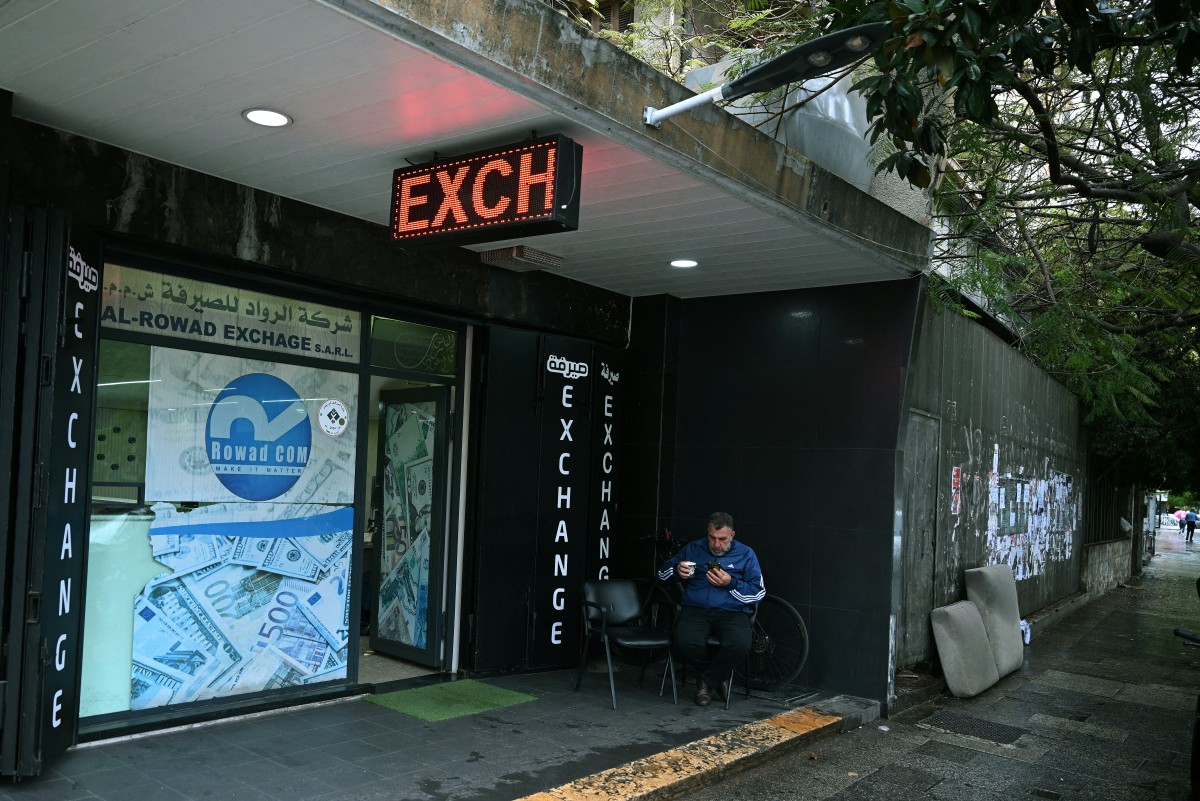




The government has approved the three measures deemed necessary to emerge from the financial collapse. Following the passage of the laws lifting banking secrecy and restructuring banks, the draft law on “Financial Regularization and Deposit Recovery” has now seen the light of day, with approval expected before the end of the year.
The draft did not defy expectations. It is a framework law, devoid of figures and technical details in form. In substance, however, it aligns with the narrative that has been promoted, assigning the bulk of the losses to Banque du Liban, while the explanatory memorandum introduces a new element by holding the state responsible for the collapse due to its default on Eurobonds.
The law spans 14 pages and includes 18 articles addressing three main headings:
First Heading
Addressing non-performing or near-non-performing debts through a set of measures, most notably:
Converting Banque du Liban’s debt to the state into a perpetual debt at an interest rate of 2%, without specifying its amount.
Freezing deposits of questionable origin and referring them to the Special Investigation Commission for verification.
Recovering excess interest paid above 2% and returning it to banks’ balance sheets.
Imposing a 20% tax on deposits exceeding $100,000 that were withdrawn after the collapse.
Restoring deposits converted from the Lebanese pound to the US dollar after October 17, 2019, in amounts exceeding $100,000, to their real value and recording them as reverse entries in banks’ accounts.
Second Heading
Deposits are divided into four categories:
Deposits of $100,000 or less, to be paid in cash in four installments over four years.
From $100,000 to $1 million: converted into asset-backed financial certificates (Category A), maturing after 10 years, with a non-compounding interest rate of 2%.
From $1 million to $5 million: converted into Category B certificates, maturing after 15 years, with a non-compounding interest rate of 2%.
Above $5 million: converted into Category C certificates, maturing after 20 years, with a non-compounding interest rate of 2%.
Third Heading
The establishment of a Deposit Recovery Fund, to which assets will be allocated to cover the certificates. These include, in addition to Banque du Liban’s assets, revenues from commodities and precious metals—effectively opening the door to the monetization of gold.
Where Is the Justice?
Dr. Pascal Daher, a lawyer specializing in oversight of central banks, argues that this draft law does not align with the fundamental principles of financial crisis management, nor with internationally adopted methodologies for loss distribution. Instead of determining responsibilities according to public accounting rules, banking supervision standards, and relevant laws, “the project adopts an approach based on transferring financial liabilities,” Daher says. Although the draft acknowledges the existence of irregular transactions carried out by banks, it nevertheless imposes direct measures on depositors, notably freezing accounts exceeding $100,000 and removing them from banks’ balance sheets to place them in a “fund” lacking legal personality. In Daher’s view, “this approach contradicts accounting disclosure standards and severs the legal link between banks and their depositors.”
The framework project for restoring financial regularity and repaying deposits does not determine the size of the financial gap, while allowing banks to rebuild their capital over five years. This, according to Daher, reflects “a disregard for the core data upon which restructuring plans are built and reveals the absence of a scientific, data-driven approach.”
The Marginalization of Lira Deposits
Despite these shortcomings, the draft law excludes branches of foreign banks operating in Lebanon from its scope. This exception carries clear academic significance, demonstrating that these branches did not engage in the credit risks and financial engineering that caused the crisis, “which confirms the non-systemic nature of the crisis,” according to Daher.
If the law is passed and implemented as is, the certificates granted to holders of dollar accounts exceeding $100,000 would amount to promissory notes of little to no value in the absence of confidence in their redemption. Depositors would effectively incur losses due to high inflation exceeding 16%, against an interest rate capped at 2%. After six years of depositors’ pain and economic hardship, the authorities have “given birth to a law that deducts more than $30 billion from deposits,” says banking expert Nicolas Sheikani, “in exchange for a pledge to repay no more than a few billion dollars.” He argues that the law is unconstitutional for contradicting Article 15, which guarantees the protection of property, and unlawful for violating the Code of Obligations and Contracts and undermining the binding force of contracts. Most importantly, he notes, the law is open to legal challenge and unlikely to gain the approval of the International Monetary Fund. Perhaps the most dangerous aspect of the project, Sheikani adds, is the omission of lira deposits, which exceed 60 trillion Lebanese pounds (previously equivalent to $40 billion), as if the law were telling depositors who trusted the country’s sovereign currency: you were wrong, and you have lost everything.
The government is set to approve the law before the end of the year and refer it to parliament. The latter will then face one of two options: either bury it in committees until after the parliamentary elections, at best, or reach a comprehensive settlement based on the notion of “forgive and forget,” as happened after the civil war, and open a new chapter. Between the two, the lesser evil remains bitter.
Please post your comments on:
[email protected]