Politics


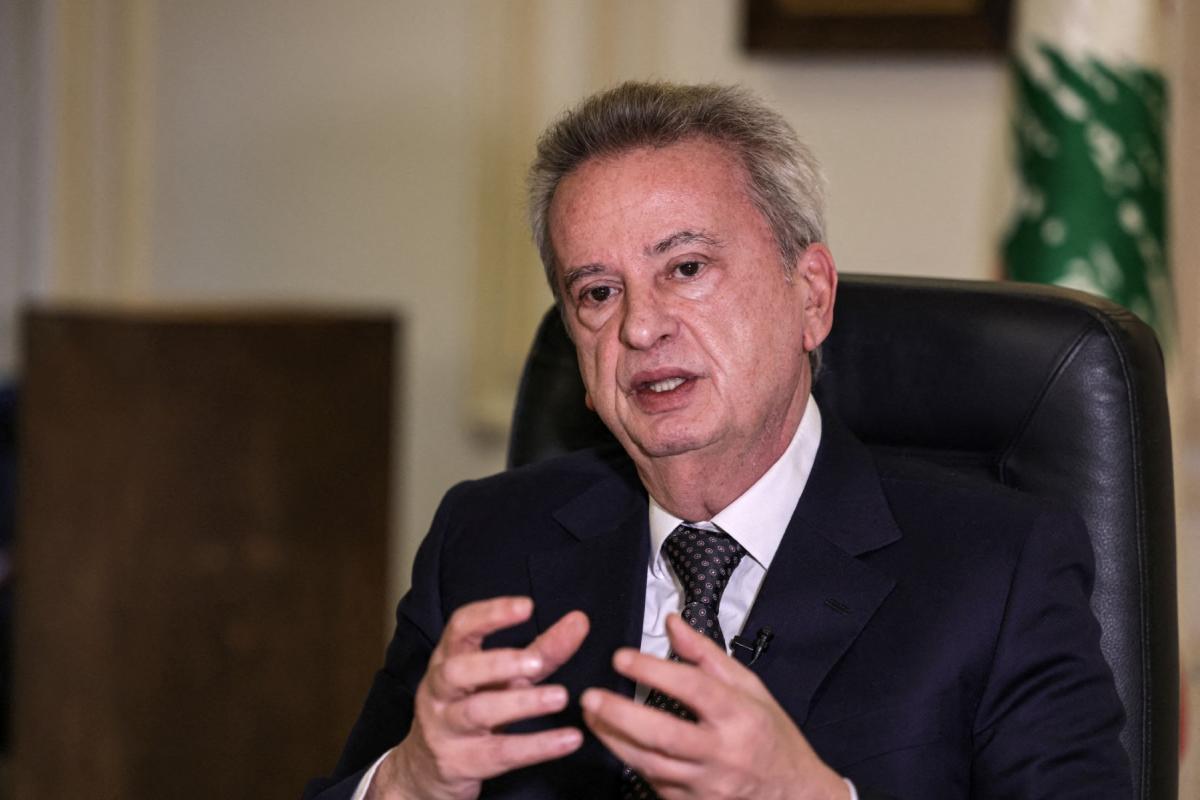




The first interview with former Central Bank governor Riad Salameh, after his release from prison, reopened the wound of Lebanon’s six-year-old financial collapse. While Salameh was right in accusing the political establishment of causing the worst monetary crisis in the country’s history—and in blaming the banks for their greed—he himself is far from innocent. He was an accomplice in giving the state a “blank check” to spend recklessly and without accountability.
In the early 1990s, a joint decision was made between the “warlords” and Riad Salameh to continue a monetary policy whose criminal elements were already fully in place. This policy, reluctantly entrenched during the final months of Edmond Naïm’s governorship and deepened during Michel Khoury’s tenure, is the very same approach that would lead, on the eve of October 17, 2019, to an inevitable collapse after nearly three decades of buying time at an exorbitant cost.
Salameh’s First Day
As Salameh drove to the Central Bank for the first time on August 1, 1993, weaving through the rubble, memories flashed in his mind. While passing the Interior Ministry—across from the Bank—he recalled the physical assault on his predecessor, Edmond Naïm, three years earlier for refusing to grant the state unfettered financing. Climbing the stairs to his sixth-floor office, Salameh could picture Naïm’s clenched fists and the marks they left on doors, tables, and chairs as he resisted being dragged to the military vehicle that would take him—under arrest—to Interior Minister Elias El-Khazen.
Once inside, another voice echoed in his ears: that of Speaker Hussein El-Husseini, shouting in fury at the Central Bank’s refusal to finance the state, asking: “How can Joha become greater than his father? In which country in the world have we ever heard that an authority within the state stands above the Council of Ministers?” But perhaps the most alarming scene Salameh encountered that day was the tacit political agreement to halt all judicial measures against the ISF officers who carried out El-Khazen’s order to arrest Naïm—and the political deal reversing the minister’s dismissal. It was a clear signal: Lebanon’s entire political class had united to break the independence of the Central Bank and prevent it from playing the role assigned to it under the Code of Money and Credit.
The Two Sins
Unlike his predecessor Edmond Naïm—who resigned months after political power violated the Central Bank’s independence—Riad Salameh did not step down. On the contrary, he embraced the distorted system “until it burst” and, in doing so, helped detonate the system as a whole. Instead of fortifying the Central Bank and steering it toward its core mission of price stability and protection against inflation, Salameh committed two fatal sins—blatantly violating Articles 229 and 91 of the Code of Money and Credit.
Sin One: Fixing the Exchange Rate
In 1998, Salameh approved fixing the exchange rate at 1,500 Lebanese pounds per US dollar, in direct violation of Article 229, which states explicitly:
“The Lebanese pound shall be assigned to the US dollar, defined as 0.888681 grams of pure gold, a floating exchange rate that reflects the closest possible value in the free market. This shall be the legal transitional price of the Lebanese pound.”
By fixing the exchange rate, Salameh destroyed the country’s only real indicator of economic performance and replaced it with an artificial, unrealistic benchmark. Every economic signal became inflated: wages rose, real estate prices surged, purchasing power improved artificially, bank lending expanded, local goods lost competitiveness abroad, imports soared, and the trade deficit ballooned. Lebanon’s economy became a massive bubble, ready to burst at any moment.
“The free exchange rate works like a barometer,” stresses Lebanese Economic Association president Mounir Rached. “It falls when conditions deteriorate and rises when they improve.” In Lebanon, the rate remained stable even as economic conditions crumbled and the twin deficits—in the treasury and in the balance of payments—deepened.
The fixed rate persisted despite rising public debt and fiscal imbalance, in defiance of the most basic economic principles. Even the IMF’s recommendation during preparations for the 2001 Paris I conference—to implement a program that included a controlled devaluation—was ignored. The fixed rate became the “fuel” powering corruption, waste, and the squandering of both public and private wealth.
Sin Two: Abandoning the Central Bank’s Independence
What Edmond Naïm fought fiercely to defend, Riad Salameh surrendered repeatedly and with remarkable ease. Under his tenure, financing the state became the rule rather than the exception—despite Article 91 of the Code, which permits state lending only under strict, temporary, exceptional conditions.
“Since the attempted kidnapping of Governor Naïm, the Central Bank lost its independence in matters of lending to the state,” writes former deputy governor Ghassan Ayash in Behind the Walls of Banque du Liban. “This independence was enshrined in law not to allow the governor to act arbitrarily toward the government, but to protect the Bank from being forced into political decisions that lead to inflation and instability.”
Salameh’s policy of opening the Central Bank’s vaults to successive governments was a double-edged sword:
It forced interest rates sharply upward to attract deposits, depriving productive sectors of investment and growth.
And it removed all incentive for the state to reform, starting with the electricity sector.
According to current Central Bank governor Karim Saïd, the Central Bank’s mandate is long-term, while political authority operates on a short or medium-term horizon. This discrepancy is precisely why Article 91 is detailed and restrictive: “The legislator is not verbose,” Saïd notes—it is a warning against leading the state into disaster.
Could Salameh Have Said No?
Could Salameh have “stomped his foot,” insisting on respecting the law, refusing to fix the exchange rate and refusing to fund the state?
If the answer is a definitive no—given what happened to Naïm and Michel Khoury—then at minimum he could have made the task more difficult, as the current governor and Central Council are now doing. But what Salameh cannot escape is his unparalleled complicity with the political system, and his decision to place the Central Bank—and depositors’ money—on a silver platter before a ruling class that ravaged the country.
Please post your comments on:
[email protected]