Politics
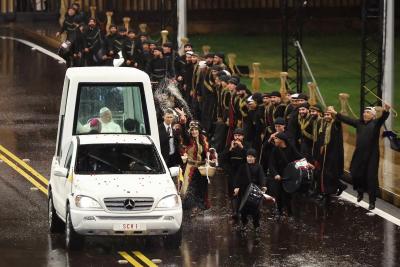
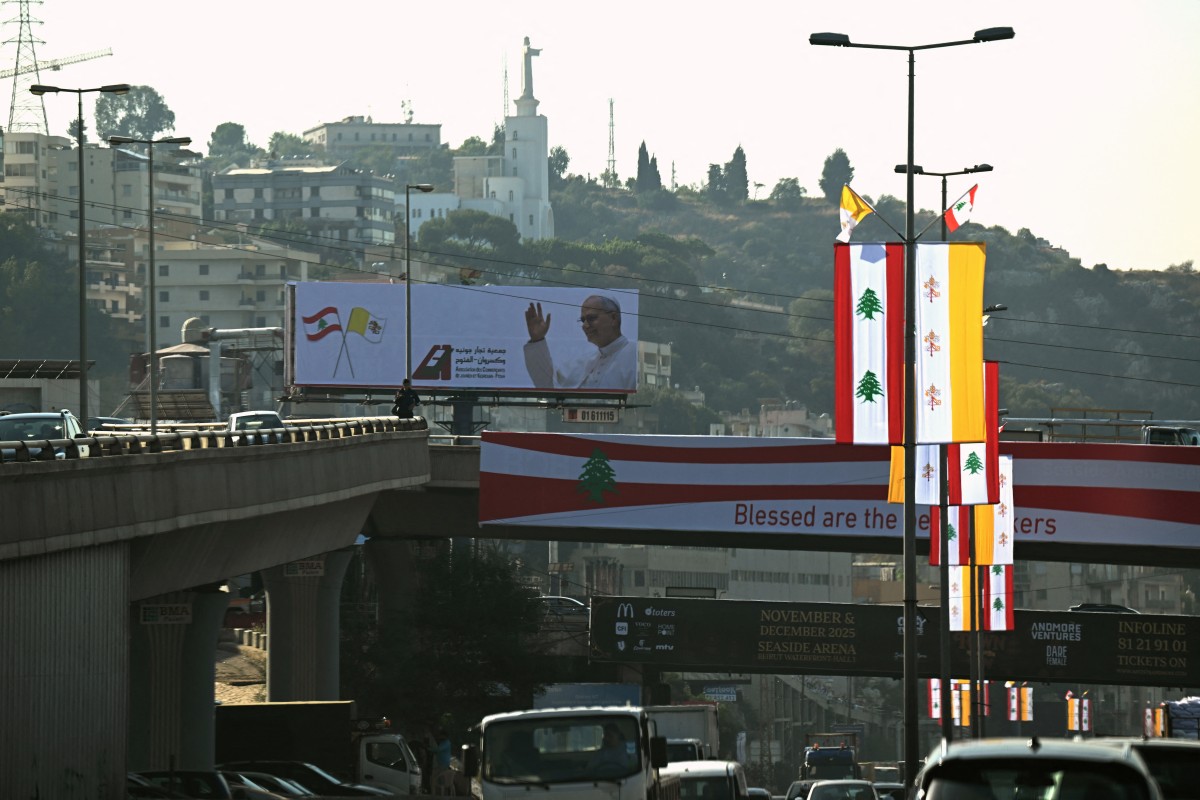




Two months ago, I wrote in this column words that suggested fear for Lebanon, words filled with despair and pessimism, recalling an old man’s remark when asked about Pope Leo XIV’s visit to Lebanon: “May His Holiness’ visit not be for anointing the Lebanon we know, amid the dangers looming over it — God forbid.”
In Christianity, the priest anoints the dying person as he draws his final breath!
Today I atone for my pessimism with hopeful wishes, written in white ink, and with reflections spoken aloud — preceding, accompanying, and following the Supreme Pontiff’s visit to Lebanon.
“In this world you will face trouble. But have faith ! I have overcome the world.” (John 16:33).
The final commandment Christ entrusted to his apostles before ascending into heaven.
“You are Peter, and on this rock I will build my Church, and the gates of hell shall not prevail against it.” (Matthew 16:18).
A statement of confidence built on rock — anchored in the power of truth that liberates when experienced, not in the power of force that destroys when embraced blindly. Every other word shatters against the rock of this eternal promise, as does every word spoken by Christ.
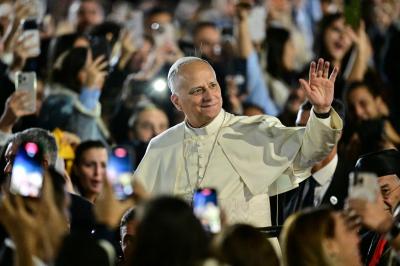
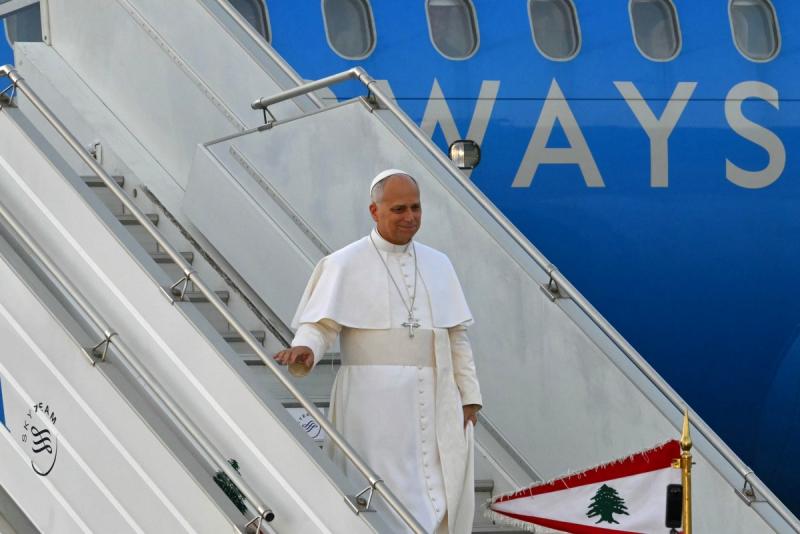
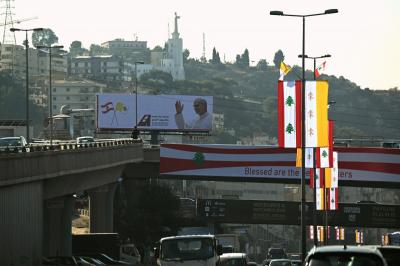
These two verses were all I needed to read, on the eve of the Pope’s visit, as I contemplate the signs on his face, the grace of his gentle smile, the blessing of his right hand bound to goodness, his calm and confident steps, and the breadth of the spiritual, political, and public meetings he will hold — alongside the speeches he will deliver under the visit’s central theme: “Blessed are the peacemakers.”
It is as if I see the successor of the Rock standing firmly upon that rock, beside the Holy Cross, with the inscription: “Do not be afraid.”
Whoever calls others to fear nothing — regardless of the magnitude of danger or weight of hardship, no matter how harsh time or place may be — fully understands that his strength is drawn solely from itself, not from any external source of power. This is the secret of its greatness, its might, and its ability to crush the gates of hell and burn the devil with its fire.
Will Christians not rediscover the essence of their faith — a faith that calls them to bear witness to Christ and to truth… even unto martyrdom?
But this power, residing in the mind of every sincere Christian, is not a power of oppression, elimination, or destruction — it is a power of goodness, grounded in two virtues: the first, reinforced by Christianity (and originally a command from Eel, the god of gods of the Phoenicians), is love; the second, unique to Christianity, is forgiveness.
A power drawn from the principle that all humans are brothers to one another, equal in dignity and freedom, entitled to difference, committed to dialogue as a means of resolving disputes, and to interaction among peoples.
Lebanon embodied all these truths — perhaps long before its time — earning the title of a “message” more than a nation. It became a model sought by other states in an era where differences collapse, distances disappear, and humanity is seen as a value in itself — created in the image and likeness of God, endowed with dignity and freedom at birth, indebted to no one for either.
Lebanon should take pride in being a pioneer among nations in establishing this culture — and must continue to uphold, strengthen, and spread it.
Christian strength is built on spreading peace — with the understanding that there can be no peace without justice.
One can almost see the Supreme Pontiff, in his insistence on restating this principle upon setting foot in Lebanon, confronting global decision-makers who preach a false peace while holding the peoples of the world — especially the East, cradle of religions and civilizations — by the throat, armed with self-interest, weapons of death and destruction, and a mastery of waging wars to secure those interests, all while worshipping money — their earthly ‘god’ — having forsaken the God of heaven and earth.
To such people, the late Pope Benedict XVI once said that his word was stronger than all they possessed — a truth Stalin failed to grasp when he once asked: “How many tanks does the Pope have?”
Yet years later, a Pope — Saint John Paul II — liberated nations that had long been crushed under the iron fist of that Soviet leader and his predecessors.
It is that same word whose meaning, malevolent minds in international power structures have tried to distort — inventing a Christ we do not know, preaching doctrines alien to everything He taught, promoting them and waging wars in their name — only for these distortions to rebound as calamities, defeats, and disillusionments upon those very minds.
It is the word once embraced by Europe — the continent of reason — which thereby offered humanity immense service; yet today Europe ignores it, becoming not the “old continent,” but the “disabled continent.”
Thus, the Pope of Rome returns to the East — diverse, deep, enchanting, rich in values and gifts, spiritually and humanly abundant — restoring to it the entrusted message that was upheld and safeguarded, so that the peoples of the East may reclaim its worth, live by its guidance, and see once more the sun of divine revelations rise from their horizons and from their uplifted foreheads, sending its light to the world without ever fading.
“Do not be afraid,” the successor of Peter will say. “Do not migrate; do not sell your land; do not imagine the West as the Garden of Eden. You are original to your East — not intruders nor passersby. Share your experiences with your Muslim brethren; contribute alongside them; be equal citizens. Your right to religious freedom — the crown of freedoms — is sacred and non-negotiable, not because it is a Christian right, but because it is a right of every human being, every citizen, whatever his origin, belief, or political choice,” as stated in the 1997 Apostolic Exhortation.
Love, forgiveness, witness, peace, justice, truth, dignity… words that may have been emptied of meaning by malicious tongues and wicked intentions — yet through the visits of the four Popes who set foot on Lebanon’s soil, each a historic milestone, these words reclaimed their true value, on the righteous path and the straight way.
What remains is that we begin — now, not tomorrow — to grasp this truth, live by it, and preach its message, without fear or hesitation, even if it costs us witness and martyrdom.
“My peace I give you”… The Pope leaves us his peace anchored in justice, and walks on — without departing.
And with this peace, he shall overcome the world — as did Christ. And we, the people of the East, are all invited to this feast of victory; let us not be late, even for a moment.
Please post your comments on:
[email protected]